0%

Choosing Soy Scented Candles for your business takes more than selecting a pleasant fragrance. Customers notice the cold scent on a shelf, but they remember how a candle performs at home. A weak scent throw, uneven melt pool, or smoky wick can undo thoughtful packaging. Small details matter.

Grand View Research estimated the global candle market at USD 12.88 billion in 2023 and projected continued growth through 2030. That figure covers candles broadly, not soy candles alone. Still, it signals a competitive category where clear product choices can help retailers stand out. Kathy LaVanier, a candle-industry leader and former National Candle Association chair, has emphasized the value of evaluating fragrance and burn performance together. Treat that as a buying principle, not a substitute for testing.

Test batches in the spaces where customers may burn them. A citrus candle can feel bright in a small shop, then become sharp in a living room. Ask suppliers for wax, fragrance, and burn-test details. Compare sample jars at consistent room temperatures, and record what changes after each test. It takes time.

No supplier’s sample tells the whole story. That is easy to overlook when launch dates are close. This guide will help you compare fragrance quality, wax blends, vessel options, supplier consistency, and price. The aim is practical: choose Soy Scented Candles that suit your brand and perform reliably, without assuming that “natural” automatically means better.
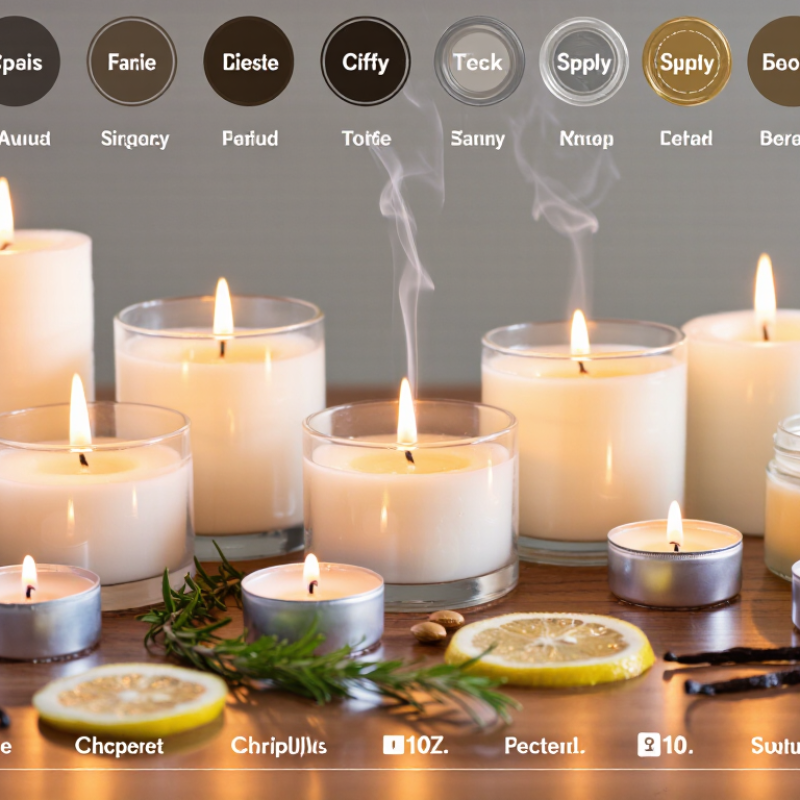
How to Choose Soy Scented Candles for Your Business

Define Your Business Needs and Target Market

Before choosing a soy scented candle, define where and how your business will sell it. A boutique hotel may need a gentle scent for guest rooms, while a gift shop may favor seasonal aromas and attractive packaging. Small rooms matter. Consider who buys from you, too. Local shoppers, online customers, and corporate gift buyers may value different things, from understated labels to ready-to-gift boxes. Set a realistic price range and estimate how often customers might repurchase. A popular scent is not automatically a good fit if its cost leaves little room for packaging and shipping.

Match fragrance choices to the setting. Citrus or herbal notes can suit bright daytime spaces, while warm vanilla or wood notes may feel more intimate. These are starting points, not rules. Soy wax can behave differently across fragrance blends, containers, and room sizes, so assess samples under conditions close to actual use. Notice the scent before lighting, during a burn, and after the candle is extinguished. One detail is easy to miss: a fragrance that smells lovely at a desk may overwhelm a small shop. Check burn performance and supplier safety information, and ask for clear product specifications. I would avoid ordering a large quantity based on one brief sniff; that shortcut can be costly. A modest trial order may reveal what customers actually prefer.

Assess Soy Wax Types and Fragrance Options

Soy wax is not one uniform material. Container-grade soy wax is designed to grip glass and form a smooth surface, while harder blends may suit molded candles better. Check the supplier’s specifications rather than relying on the word “soy” alone. A wax that looks creamy in a sample can frost or pull away from a jar after cooling. That is not always a defect, but it affects shelf appearance.

Fragrance choice depends on more than how it smells from the bottle. Test candle-ready fragrance oils at the wax maker’s recommended usage range, then adjust only within its stated limits. A warm vanilla may feel strong on a paper strip but faint after burning; a crisp citrus can shift noticeably with heat. Keep notes on wax type, measured fragrance, wick, and cure time. Small batches matter. Let each test cure consistently, then compare scent in the same room and jar size. One detail is easy to overlook: wick performance changes the melt pool, so it can change the fragrance customers notice. I have found that a scent I expected to sell well sometimes feels too sharp when warmed. Retest before ordering in bulk.

How to Choose Soy Scented Candles for Your Business

Compare wax specifications and fragrance options with small, controlled test batches before scaling production.

How to read this chart: For 250 g of wax, a 6%, 8%, or 10% fragrance load equals 15 g, 20 g, or 25 g of fragrance oil, respectively. These are test levels, not universal limits. Check the wax supplier’s specifications and the fragrance oil’s usage guidance. Test each scent option—such as citrus, floral, or woody—in the same wax and batch conditions, then compare hot throw, cold throw, and burn performance.

Check Candle Quality, Safety, and Labeling

When choosing soy-scented candles for your business, inspect the whole burn system—not just the wax. Ask suppliers for batch records, fragrance specifications, and burn-test results. Check that the wick stays centered and the melt pool remains controlled. Look for tunneling, excessive soot, cracked glass, or a flame that grows unusually high. Soy wax alone does not guarantee a cleaner or safer candle; wick size, fragrance load, and vessel design matter too.

Safety deserves more than a quick glance. The National Fire Protection Association’s report on U.S. candle fires found an average of about 7,400 home structure fires involving candles each year from 2015 to 2019. Review relevant ASTM candle standards, including F2417 for fire safety and F2058 for warning labels. Labels should give clear burning and placement instructions, plus warnings to keep candles away from drafts, children, and pets. Requirements can vary by market, so verify local rules before selling. I would not treat a polished label as proof of a tested product.

Tips: Request test documentation for the exact candle and vessel combination. Read every label as a customer would, beside a lit candle. Check that warnings are legible, durable, and easy to understand. Small details can be missed, even with a careful review.

Compare Suppliers, Customization, and Minimum Orders

For a business, soy wax is only one part of the purchase decision. Compare suppliers on wax composition, fragrance documentation, wick testing, and batch consistency. Grand View Research estimated the global candle market at USD 12.88 billion in 2023, with projected annual growth of 6.3% through 2030. That signals a competitive category, not guaranteed demand for your product. Ask for a sample from the production formula, not just a showroom sample. Smell it cold and burning; the difference can be real.

Request written details on customization: scent options, vessel colors, label printing, and packaging. Ask whether changing one element affects production time or cost. For fragrance safety, request current documentation and confirm how the supplier evaluates scent concentration and candle performance. Compare quotes using the same vessel size, wax fill, packaging, and shipping terms. Otherwise, a cheaper unit price may hide extra costs.

Minimum orders need careful comparison. A supplier may set one MOQ for each scent and another for custom packaging. Get both in writing, along with sample fees, lead times, and reorder quantities. If you are testing demand, a smaller opening order can reduce unsold stock, even when its unit cost is higher. One caveat: customization can make reorders less flexible. I would confirm that labels, vessels, and fragrance formulas can be repeated before approving a large run.

Calculate Costs and Test Samples Before Buying

How to Choose Soy Scented Candles for Your Business

Calculate costs before comparing sample prices. Grand View Research valued the global candle market at about $10.8 billion in 2022 and projected 5.7% annual growth through 2030. That signals a sizable market, not guaranteed demand for your scent. Build a per-unit cost from wax, fragrance, wick, vessel, label, labor, freight, and likely breakage. Then add payment fees and storage. The U.S. Small Business Administration’s break-even guidance uses fixed costs divided by contribution per sale. For example, a $24 candle with $10 in variable costs contributes $14 before overhead; $1,400 in monthly fixed costs would require 100 sales to break even.

Order samples only after checking minimum quantities, lead times, and whether quoted prices include shipping. Test each candle in the vessel you plan to sell. Record burn time, wick behavior, scent strength when cold and lit, and any residue on the glass. Use the same room and burn intervals for each test. Small differences matter.

A sample is not a promise of a consistent production batch. Ask for the wax and fragrance specifications, then test a later sample if the supplier changes materials. Let candles cure as directed before judging scent. Keep notes, even when results feel obvious; scent memory is unreliable. I would not scale from one attractive test burn.

How to Choose Soy Scented Candles for Your Business - Calculate Costs and Test Samples Before Buying

Use the comparison below as a planning example. Prices are illustrative USD estimates for unbranded, finished candles; actual quotes vary by supplier, fragrance, vessel, packaging, order size, and shipping destination.

Candle Option Approx. Wax Fill Illustrative Unit Price Example MOQ Freight per Unit Estimated Landed Cost per Unit Example Retail Price Gross Margin Before Other Costs
Small jar 8 oz (227 g) $6.50 48 units $0.75 ($36 freight ÷ 48) $7.25 $18.00 59.7%
Medium jar 10 oz (283 g) $8.25 48 units $0.88 ($42 freight ÷ 48) $9.13 $24.00 62.0%
Large jar 12 oz (340 g) $10.25 36 units $1.08 ($39 freight ÷ 36) $11.33 $29.00 60.9%

Calculation: landed cost per unit = unit price + allocated freight. Gross margin = (retail price − landed cost) ÷ retail price. These figures exclude taxes, duties, storage, payment processing, marketing, and other operating expenses.

Sample-Buying and Quality-Test Plan
Check What to Request or Test Practical Evaluation Method Record Before Ordering
Sample cost Request 2–3 fragrance samples in the size and vessel you plan to sell. Example planning allowance: $25–$45 for a small sample shipment. Confirm sample, shipping, and any credited sample fees with the supplier. Total sample spend and whether it is refundable or credited against an order.
Cold scent Assess fragrance strength before lighting. Smell each sample in the same room after opening; rate scent strength from 1 (very light) to 5 (very strong). Fragrance name, rating, date opened, and reviewer notes.
Burn performance Follow the supplier’s burn and safety instructions; test on a stable, heat-resistant surface. Burn in sessions of about 3–4 hours, never unattended. Track melt-pool development, flame behavior, soot, and total burn time across the full candle life. Session length, approximate burn time, visible soot, and any tunneling or wick issues.
Hot scent Evaluate fragrance while the candle is burning. Use the same room and ventilation for each sample. Compare scent strength and character at consistent intervals; avoid relying on a single test session. Room conditions, scent rating, and whether the fragrance remains pleasant over time.
Container and finish Check jar condition, lid fit, label placement, and packaging protection. Inspect samples on arrival and again after testing. Note chips, leaks, loose lids, label defects, or transit damage. Defect count and photos of any issues to share with the supplier.
Final cost check Obtain a written quote for the exact fragrance, vessel, packaging, quantity, and delivery location. Recalculate landed cost using the quoted goods total plus freight and applicable import charges, divided by sellable units. Quoted MOQ, lead time, payment terms, shipping method, and final cost per sellable unit.

Buying decision: Compare samples only after testing them under similar conditions. Confirm the supplier’s product specifications and applicable candle-safety labeling requirements for your market before placing a bulk order.

FAQS

How should I choose a soy-scented candle for my business?

Start with your customers, setting, and price range. A hotel room may need a gentle scent, while a gift shop may prefer seasonal aromas and ready-to-gift packaging. Small rooms matter.

Which fragrances work best in different spaces?

Citrus or herbal notes can suit bright daytime spaces. Vanilla or wood notes may feel warmer and more intimate. These are only starting points; test each scent in the actual room.

Should I test samples before placing a large order?

Yes. Smell each candle before lighting, while it burns, and after it goes out. A scent that seems pleasant at a desk may overwhelm a small shop. I would not rely on one quick sniff.

Are all soy waxes the same?

No. Container-grade wax is made for jars, while harder blends may suit molded candles. Check product specifications, since some waxes can frost or pull away from glass as they cool.

How can I compare fragrance strength fairly?

Use the supplier’s recommended fragrance range and keep each test consistent. Record the wax, measured fragrance, wick, jar size, and cure time. Small batches help.

What should I look for during a candle burn test?

Check that the wick stays centered and the melt pool remains controlled. Look for tunneling, heavy soot, cracked glass, or an unusually high flame. A neat-looking candle can still burn poorly.

Does soy wax alone make a candle safer or cleaner?

No. Wick size, fragrance amount, and vessel design also affect how a candle burns. I have sometimes expected a scent to feel soft, then found it too sharp when warmed.

What information and label details should I check before selling?

Ask for test records and fragrance specifications for the exact candle and vessel. Labels should clearly explain burning and placement, including keeping candles away from drafts, children, and pets. Check local requirements; a polished label is not proof of testing.

Conclusion

Choosing Soy Scented Candles for a business begins with a clear understanding of your goals and customers. Consider where the candles will be sold, the occasions they should suit, and the fragrance styles your target market prefers. Compare available soy wax types and scent options, keeping in mind how wax and fragrance combinations may affect the candle’s appearance, scent throw, and overall customer experience.

Before placing an order, review product quality, safety features, and labeling details, then compare suppliers on consistency, customization choices, and minimum order quantities. Request samples to assess the candles in person and gather feedback before committing to a larger purchase. Finally, calculate the full cost, including packaging and delivery where applicable, and weigh it against your expected pricing and margins. A careful evaluation helps you select candles that fit your business needs, meet customer expectations, and support a confident buying decision.

Ethan

Ethan

Ethan is a professional marketing specialist with a deep understanding of the company’s products, their features, and the practical needs they are designed to address. He combines product knowledge with a clear, customer-focused approach, helping readers understand how the company’s solutions can......